Accepting QRIS payments at a yoga or pilates studio in Bali
How yoga and pilates studios in Bali take QRIS without checking screenshots: static or dynamic QRIS, what travellers can pay with, and Bank Indonesia fees.
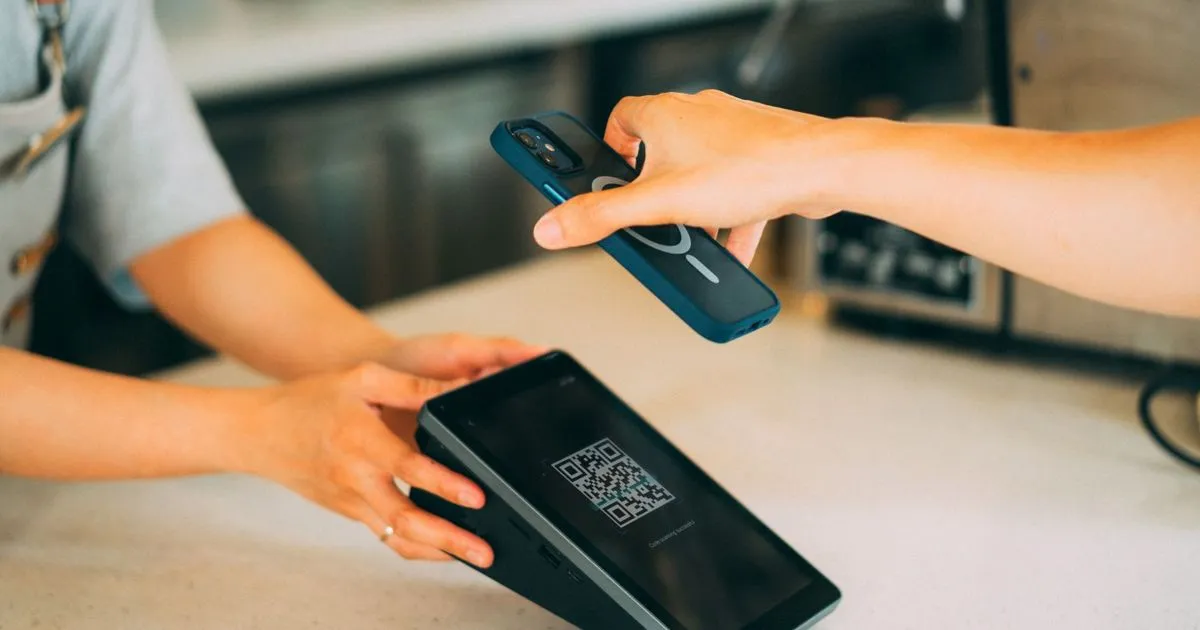
It is the end of a busy morning in Canggu. Your front desk has a QRIS sticker on the counter, a phone full of payment screenshots in WhatsApp, and a traveller from Melbourne asking whether she can pay by card. Meanwhile two people have paid for the last reformer in the 5pm class.
QRIS is how most people in Indonesia pay for small things, and almost every yoga and pilates studio in Bali already accepts it. What differs is how it is set up. In one studio, QRIS means a sticker and an evening spent matching payments to bookings. In another, clients pay on the booking page and the booking confirms itself.
This guide covers the three ways a class-based studio can take QRIS, what travellers can actually pay with, the fees Bank Indonesia sets, and what to ask a booking system before you rely on it.
Three ways to take QRIS at a studio
1. Static QRIS. One printed code on the counter, or an image sent in chat. The client scans it, types the amount, and sends you a screenshot. Bank Indonesia describes this as the simplest option, suited to micro and small businesses.
2. Dynamic QRIS at the front desk. A card terminal or cashier app creates a code for one payment, with the amount already filled in. The client scans and pays. It works for walk-ins and anything bought at the desk.
3. QRIS at booking checkout. The client picks a class on your booking page and pays with a QRIS code made for that order. The payment is tied to the booking, so you know who paid for which class.
| Static QRIS | Dynamic QRIS at the desk | QRIS at booking checkout | |
|---|---|---|---|
| Amount | Typed by the client | Filled in by the desk | Filled in from the order |
| Which class was paid for | Matched by hand | Recorded by the desk | Tied to the booking |
| Confirmation | Someone checks the bank app | Desk sees the notification | Booking confirms after payment |
| Client must be at the studio | No | Yes | No |
| Best for | New studios, low volume | Walk-ins and desk sales | Online booking, class packs, limited spots |
Most studios end up with two: online checkout for bookings made on a phone, and a QRIS at the desk for people who walk in.
What travellers can pay with
In Bali, a large share of drop-in clients are visitors, and QRIS does not always work for them.
- Residents and long-stay visitors with an Indonesian bank account or e-wallet pay QRIS like everyone else.
- Some short-stay visitors can scan QRIS with an app from home. Bank Indonesia’s cross-border QRIS page lists links with Thailand, Malaysia, Singapore, Japan, South Korea and China, and names the foreign banks and e-wallets that can pay at Indonesian merchants (checked 4 November 2026). Whether a given app works at your checkout also depends on your payment provider, so do not promise it on your website.
- Everyone else usually pays by card. If your booking page only offers QRIS and bank transfer, you will lose some of these bookings, or take them as cash at the door.
So for a Bali studio, the question is not just whether a system takes QRIS. It is whether a first-time visitor can book and pay from their phone without an Indonesian bank account and without creating an account.
Where static QRIS breaks down
Static QRIS is fine for a solo teacher with ten regulars. It starts to hurt when bookings come from many people at once.
The bank app does not say which class. It shows an amount and a time. If three people pay Rp250,000 on the same afternoon, someone has to work out which payment is the Tuesday reformer, which is a class pack, and which is a private session.
Screenshots have to be checked. A screenshot in chat is not money in the account. Someone still opens the bank app and matches each one, usually during the busiest hour of the day.
The last spot can sell twice. Reformer classes often have six to ten spots. One client asks about the last spot in a DM, gets a yes, and goes to pay. Another client pays first. Two paid clients, one reformer.
Amounts get mistyped. Rp1,500,000 for a class pack becomes Rp150,000, and nobody notices until the monthly count.
Month-end becomes a project. Pack sales, drop-ins, refunds and cash have to be rebuilt from chat, the bank app and the desk notebook. With two branches on two accounts, it is twice the work.
What QRIS costs a studio
Every QRIS payment carries a fee called the Merchant Discount Rate (MDR). Bank Indonesia sets it by business category and transaction amount. These rates apply from 1 October 2026.
| Business category | Transaction amount | MDR |
|---|---|---|
| Micro business | Up to Rp500,000 | 0% |
| Micro business | Above Rp500,000 | 0.3% |
| Small, medium and large business | Up to Rp100,000 | 0% |
| Small, medium and large business | Above Rp100,000 | 0.7% |
Sources: MDR QRIS Bagi Merchant, Bank Indonesia and press release No. 28/159/DKom, checked 4 November 2026.
For a studio registered as a small business:
| What the client buys | Price | MDR | Fee per payment |
|---|---|---|---|
| Community mat class | Rp90,000 | 0% | Rp0 |
| One reformer class | Rp250,000 | 0.7% | Rp1,750 |
| 10-class pack | Rp2,500,000 | 0.7% | Rp17,500 |
As a micro business, the same Rp2,500,000 pack costs 0.3%, which is Rp7,500.
Three things worth knowing:
- The studio pays the MDR. Bank Indonesia states that it may not be passed on to the customer, so do not add a “QRIS fee” on top of the class price.
- Online payment providers set their own rates. The table is the QRIS MDR rule. A provider that processes payments on a website can charge its own rate under its contract, and cards are priced separately. Ask for the fee per payment for each method before you choose.
- There is a cap. Bank Indonesia limits a QRIS payment to Rp10,000,000. For retreats, teacher trainings or annual memberships above that, offer a Virtual Account or a card.
To work these fees into your prices, see pilates class prices in Indonesia.
What to ask a booking system about QRIS
Almost every booking app says it takes QRIS. These questions separate QRIS that removes admin work from QRIS that just moves the sticker onto a screen.
- Is a QRIS code created for each order, with the exact amount? If clients still type the amount or send screenshots, the checking work stays.
- Does the booking confirm itself once payment succeeds? The client should get a confirmation without waiting for a reply from the desk.
- What happens to the spot while the client pays? For reformer classes, the spot should be held while the client pays and released if payment is not finished in time. Without a hold, two people can pay for the same spot. With a hold that never ends, a spot sits empty for someone who never paid.
- Whose account does the money go into, and when? Ask whether payments go to the studio’s own payment account, or are collected by the vendor and paid out later. Ask when QRIS money becomes available.
- Can the report be reconciled with the bank? Look for a report that records each payment on the day the money arrives, with a reference number per transaction, and exports. With several branches, ask whether each one can have its own payment account and report.
- How are refunds recorded? Cancelling a class and returning money are different things. Ask how full and partial refunds are made and where they show up.
- Can visitors pay without an Indonesian bank? Ask which methods appear at checkout, whether cards are accepted, and whether a guest can pay without creating an account.
For the apps you might ask, see pilates studio booking software in Indonesia: 8 options compared.
A payment policy you can copy
Put your payment rules on your booking page and in your Instagram bio. Adjust this to fit:
A booking is confirmed once payment succeeds. Your spot is held while you pay. If payment is not finished in time, the booking is cancelled and the spot goes back to the schedule.
We accept QRIS, Virtual Account, e-wallets and cards. Class prices are final, with no extra fee for any payment method.
Cancellations follow our cancellation policy. Refunds are handled separately and returned to the original payment method or an agreed account.
For the cancellation rules that go with it, see the pilates studio cancellation policy template.
How Vlora handles QRIS payments
Vlora is booking and payment software for wellness studios in Indonesia, and we wrote this guide. This is how payments work in Vlora:
- Clients pay on your studio’s booking page. They choose a class at yourstudio.vlora.app and pay by QRIS, Virtual Account, e-wallet or card. Travellers can book and pay without creating an account.
- Only methods that fit are shown. Methods that cannot be used for that amount are hidden, so clients choose from what is actually available.
- The spot is held while the client pays. When a booking comes in, the spot comes off the class straight away, so two people never get the same last spot. If the payment time limit passes, the booking is cancelled and the spot goes back on the schedule.
- Money goes to the studio’s own payment account. Each location can take payments into its own payment account, and the finance report can be split by location.
- QRIS payments settle the same day. The finance report records a payment on the day the money comes in, and a refund on the day it goes back. The Excel export includes each transaction’s reference number, so it can be matched against the bank.
- A PDF receipt goes out with the confirmation email, showing the price and promotion as they stood when the booking was made.
- Cancellations and refunds are separate. Cancelling a booking does not return money by itself. Full or partial refunds are made on their own and recorded in the finance report.
- The front desk is recorded too. Staff record how each booking at the studio is paid: cash, class pack, membership, voucher or a free class. If you turn on paying at the studio, clients can also pay when they arrive.
More on QRIS payments and finance reports. For reformer studios with limited spots, see booking software for pilates studios. For studios with many drop-in travellers, see booking software for yoga studios.
Common questions
What is the difference between static and dynamic QRIS?
Static QRIS is one code for every payment, and the client types the amount. Dynamic QRIS is made for one payment, with the amount filled in. For class bookings, dynamic QRIS tied to the order tells you who paid for which class.
Can a studio add a QRIS surcharge?
No. Bank Indonesia states that the MDR is paid by the merchant and may not be passed on to the customer.
Can tourists in Bali pay with QRIS?
Some can. Visitors with an Indonesian bank or e-wallet app can, and some apps from partner countries in Bank Indonesia’s cross-border QRIS list can too. Keep cards available for everyone else.
Can clients pay for a class pack with QRIS?
Yes, up to Rp10,000,000 per payment, the limit set by Bank Indonesia. Above that, use a Virtual Account or a card.